Under the Loupe: Grading a UK CBD Oil Label Before You Buy
Photo: elsaolofsson, CC BY 2.0, via Wikimedia Commons
A good jeweller does not start with the price tag. They start with the stone: clarity, cut, colour, carat, and the paperwork that backs it up. Buying CBD oil in the UK should feel similar. The label is the setting; the certificate of analysis is the grading report. Neither is glamorous, but together they tell you whether you are looking at something genuine or something polished for the shelf.
This is not about becoming a lab technician. It is about learning where to look, what to ignore and which questions are worth asking before you hand over your money.
Start with the setting: what the label promises
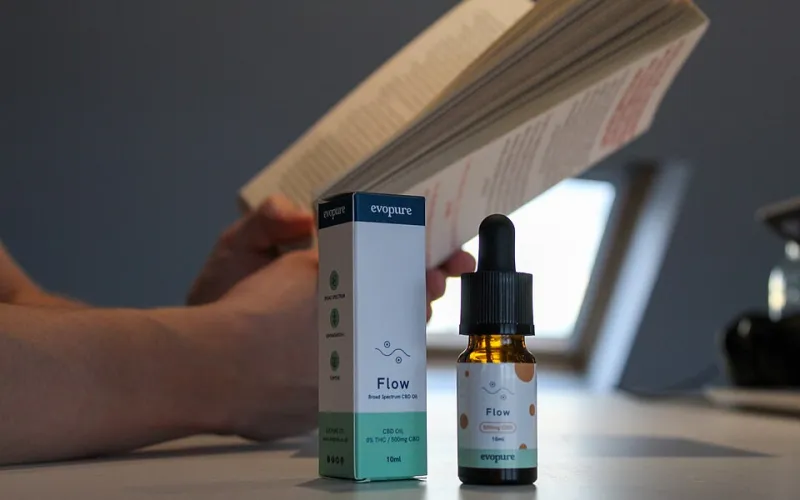
A UK CBD oil label should tell you the brand, the product name, the CBD content, the bottle size, the batch number and the best-before date. It should also make the carrier oil obvious. MCT oil, hemp seed oil and olive oil are common, and none is automatically better than the others — but you should not have to guess.
The label should be clear about the type of extract. Is it isolate, broad spectrum or full spectrum? Does it list other cannabinoids such as CBDA, CBG or CBN? If the front of the bottle says 'full spectrum' but the back says nothing about cannabinoids, treat that as a loose clasp rather than a hallmark.
In the UK, CBD products sit within the novel food framework, and reputable brands should be able to point you towards their novel food status or the relevant public list. That is not a guarantee of quality, but it is a sign that the business is paying attention to the rules rather than hoping you will not ask.
The certificate of analysis is the grading report
A certificate of analysis — usually shortened to COA — is a lab report for a specific batch. It should include the batch number, the date of analysis, the cannabinoid profile and the results of safety tests. The exact format varies between labs, but the useful ones are easy to match to the bottle in your hand.
Look for cannabinoid potency first. The report should show CBD and, ideally, THC. In the UK, THC content in CBD products should be very low or absent, and a transparent brand will not hide that number. If the COA only shows CBD and skips THC entirely, ask why. It may be an isolate, but the report should still say so clearly.
The safety panel matters too. Heavy metals, pesticides, mycotoxins, residual solvents and microbial contamination are the inclusions a jeweller would want to rule out. You do not need to interpret every number, but you should be able to see that the tests were done and that the batch passed.
The four Cs of a CBD label
Borrowing from the gemologist's toolkit, here is a simple way to grade what you are looking at.
Clarity. Can you find the batch number, the CBD amount per ml and the carrier oil without squinting? Is the COA linked clearly on the product page, or do you have to email customer service twice? Clarity is a form of respect.
Consistency. Does the label match the lab report? If the bottle says 10% CBD, does the COA support that? If the website says full spectrum, does the report show minor cannabinoids? Small mismatches are common; repeated mismatches are a warning.
Cannabinoid profile. This is the cut of the stone. An isolate will be mostly CBD. A broad spectrum may include other cannabinoids but no THC. A full spectrum should show a wider profile. None is inherently superior — but the label and the report should agree on which one you are buying.
Carrier. Carrier oils affect taste, texture and shelf life. MCT is light and neutral; hemp seed oil adds a nutty flavour; olive oil can feel heavier. A good label names the carrier and does not bury it under a long ingredient list. If the carrier is unclear, the product is not as transparent as it looks.
Batch dates and freshness
CBD oil is not wine. It does not improve with age. A batch date and a best-before date help you judge freshness, and they should be printed on the bottle rather than hidden in a product listing. The COA should relate to that batch, not to a generic sample from a year ago.
If a brand cannot tell you when the batch was made or tested, that is a quiet inclusion. It does not prove the oil is poor, but it does mean you cannot verify what you are buying. In a market with plenty of choice, that is a reason to keep looking.
Red flags and quiet inclusions
Some flaws are obvious: missing batch numbers, vague 'hemp extract' labels, dramatic medical claims, or a price that suggests the packaging cost more than the contents. Others are subtler. A COA that tests only potency and not contaminants is thin. A 'full spectrum' claim with no THC result is incomplete. A carrier oil listed only as 'natural oil' is a shrug in print.
Also watch for serving-size gymnastics. If the label lists CBD per drop but not per ml, or per bottle but not per serving, do the maths. A bottle can look generous until you realise each serving is tiny. That is not necessarily dishonest, but it is not clear either.
A jeweller's checklist for the shop
Before you buy, ask four questions. Can I see the COA for this batch? Does it include THC and contaminant tests? What is the carrier oil? And what is the best-before date? A good UK CBD brand will answer these without drama. A great one will have the answers on the product page already.
You do not need to become an expert in chromatography. You just need to know when the paperwork is doing its job. A beautiful bottle is nice. A clear label and a matching lab report are better. That is the difference between a pretty pebble and a stone worth keeping.