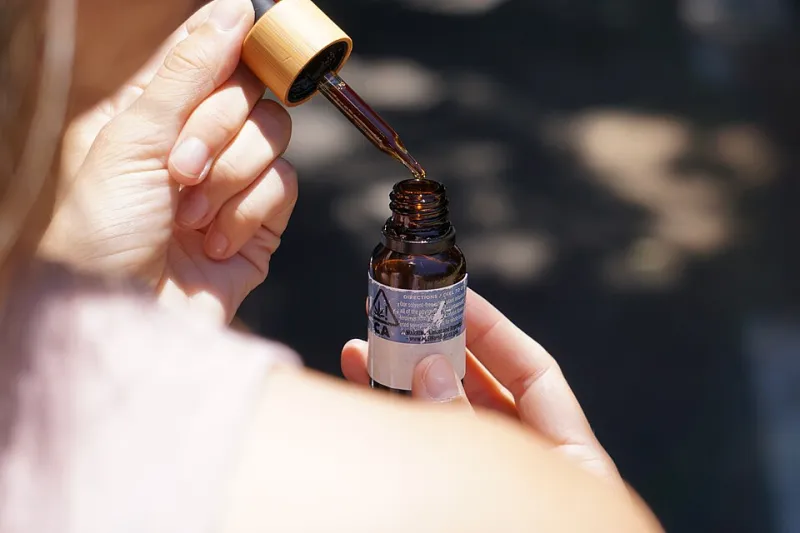
What 'One Full Dropper' Actually Means: A Kitchen-Table Audit of Your CBD Pipette
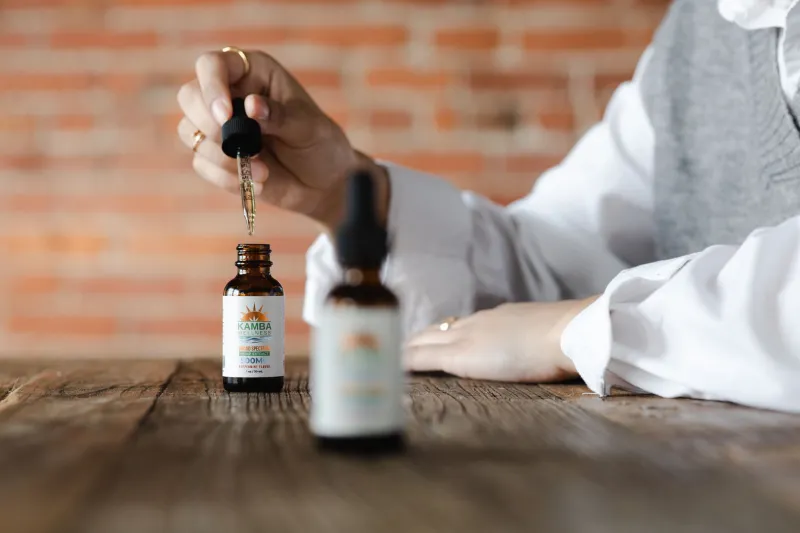
There's a moment in every CBD purchase where the label gets read, the reviews get skimmed, the bottle gets photographed for the shelf — and then the pipette gets ignored for the rest of its life. Which is a bit odd, because the pipette is the only piece of kit standing between the milligram figure on the carton and the amount you actually swallow.
Two 10ml bottles can sit side by side in a UK kitchen cupboard, both claiming a full dropper as the serving, and deliver numbers that are nowhere near each other. Not because either brand is fibbing, necessarily. Because the dropper is an unstandardised bit of glass and rubber that nobody audits.
So let's audit it. That's the CBD Gems approach: less mystique, more measuring.
Why 'one full dropper' is not a unit
A pipette is not a teaspoon. There's no British Standard for how much a 10ml CBD dropper holds, and the markings etched or printed on the glass are usually cosmetic rather than calibrated — a guide, not a guarantee. Some hold a full millilitre. Plenty hold 0.7ml, or 0.6ml, or 0.8ml depending on where the rubber bulb pushes the fill line. Some have graduation marks at 0.25ml intervals, some at 0.5ml, some have none at all beyond a decorative line near the top.
Add in the variables: an air bubble trapped under the bulb, a cold January windowsill making the oil thicker so drops swell, a rushed squeeze that pulls a short fill, and a pipette held at an angle rather than vertically. None of this is dramatic on its own. Stacked together, it's the difference between a carefully judged routine and a guess wearing a lab coat.
The two figures on the bottle that do the real work
Ignore, for a moment, anything the label says about drops. Look for two numbers instead: total CBD in milligrams, and total bottle volume in millilitres. Divide the first by the second and you have your milligrams per millilitre.
- 10ml bottle, 500mg → 50mg per ml
- 10ml bottle, 1000mg → 100mg per ml
- 30ml bottle, 1500mg → 50mg per ml
That figure — mg/ml — is the honest backbone of the whole bottle. It holds whether you use a pipette, a syringe or a demitasse spoon. Everything else is a delivery mechanism, and delivery mechanisms need testing.
The kit (roughly a fiver, once)
- A 1ml oral syringe. The sort sold for baby medicine. Most UK pharmacies will hand you one over the counter for free or a couple of pounds; they're also in chemists' own-brand infant care ranges.
- A shot glass, egg cup or small ramekin. Something stable, glass, and easy to see into.
- A notebook and pen. Paper beats a phone here, because you'll want the numbers side by side.
Optional fourth item: a kitchen scale that reads to 0.01g, if you want to weigh rather than eyeball.
Running the test
Do it somewhere flat and unhurried, with the bottle at room temperature rather than straight off a cold doorstep.
Step one. Write down the totals from the label: milligrams and millilitres.
Step two. Fill the pipette to its top mark and empty it into the syringe. Note the volume. Repeat three times and take the average. This tells you how much a 'full dropper' truly is in your hands — not in a copywriter's.
Step three. Draw exactly 1ml into the syringe and drip it into the shot glass, counting every drop as it falls. Keep the tip vertical and the squeeze slow and even. Do this three times and average the counts. Some oils will land around 20 drops per millilitre; thicker or thinner formulas will drift either side of that.
Step four. Divide. Milligrams per millilitre, divided by drops per millilitre, equals milligrams per drop.
A quick worked example. A 10ml bottle containing 1000mg is 100mg/ml. If your count comes out at 20 drops per ml, each drop carries 5mg. If your pipette's top mark turns out to be 0.7ml, then a 'full dropper' is 70mg — not the 100mg a casual reading of the label might suggest.
Step five. Convert your normal routine into milligrams. If you usually take eight drops, you now know whether that's 40mg or, on a different bottle, 20mg.
Step six. Repeat the drop count once in genuinely cold weather. Viscosity moves the number, and it's useful to know by how much.
A note on hygiene: don't tip oil back into the bottle once it's been in the shot glass, and keep the syringe for this job only.
What the results tend to show
In practice, most medium-chain triglyceride carriers land between 18 and 24 drops per millilitre at room temperature, and most 'full droppers' come up short of a full millilitre. None of that is scandalous. It only becomes a problem when a brand markets a precise per-drop figure without defining the drop, or when your routine quietly drifts because the bottle changed and the pipette did too.
It's also a useful transparency tell. A brand that prints a clear mg/ml figure, ships a pipette with legible graduations, and can point you to a batch certificate of analysis is behaving like a CBD gem. A brand with faint markings, no declared volume per dropper and a fuzzy milligram story is asking you to do guesswork in a dressing gown.
Where this fits in a sensible routine
Once you have your milligrams-per-drop figure, keep it in the notebook alongside the batch number and the date you opened the bottle. Change one variable at a time, give any change a couple of weeks, and don't rebuild the whole routine on a Tuesday because a stranger on the internet said so.
Worth keeping in view: UK regulators take an interest here. The Food Standards Agency's precautionary advisory for healthy adults sits at 10mg of CBD per day, and the MHRA's position on medicinal claims is unchanged — CBD products are not medicines, and the novel food authorisation process rolls on. Your GP or pharmacist is the right conversation if you take prescription medication or are unsure.
But the arithmetic is yours. Five minutes, a syringe, a shot glass and a notebook, and you'll never again have to take 'one full dropper' on trust. That's the quiet difference between an expensive habit and a product you actually understand — and understanding is most of what makes a gem a gem.
This is general information, not medical advice.