The Other 90 Per Cent: Why the Carrier Oil Makes or Breaks a UK CBD Gem
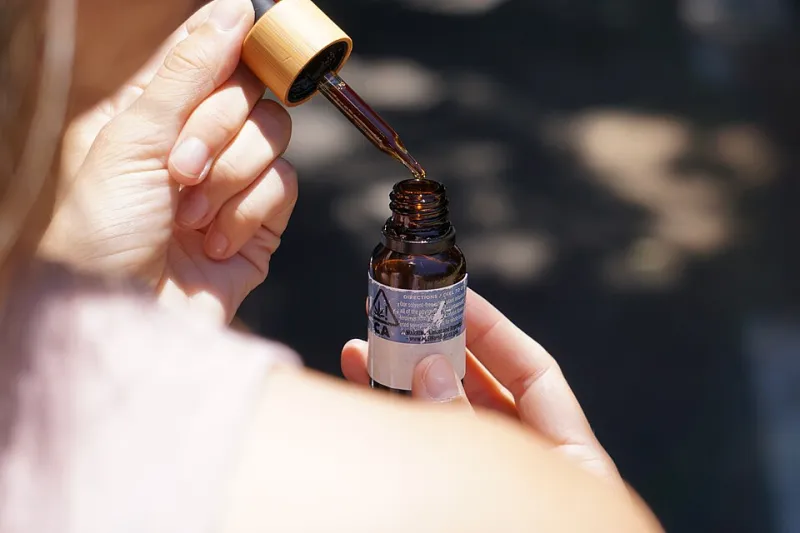
Photo: elsaolofsson, CC BY 2.0, via Wikimedia Commons
There's a quiet moment in every CBD purchase where the eye jumps straight to the milligram figure on the front of the bottle. Fair enough. It's the number everyone compares, the one that makes a £28 oil feel different from a £52 oil. But flip the bottle round and you'll usually find that the CBD itself makes up somewhere between five and fifteen per cent of what's inside. The rest — the vast, unsung majority — is carrier.
That's not a scandal. It's just physics. Cannabidiol needs a fat to travel in, and the carrier is what turns a thick resin into something you can dose with a dropper. Still, treating the base as filler is how you end up with a bottle that tastes like a garden centre, turns cloudy in a cold kitchen cupboard, or sits half-used at the back of a shelf because you quietly stopped reaching for it.
The four bases you'll actually meet
UK shelves are dominated by a handful of carriers, and each one has a personality.
MCT oil (fractionated coconut). The default for a reason: thin, near-flavourless, and it lets the hemp extract do the talking. It holds a clean mouthfeel and disperses readily, which is why so many tinctures use it. Downsides are modest — a slightly slippery texture some people dislike, and a reputation for being the safe, boring choice. Boring is often correct.
Hemp seed oil. Nutritionally rich, nutty, and pleasingly on-brand for a plant product. It also brings a distinct grassy edge that either complements a full-spectrum extract or fights with it. Hemp seed oil is more perishable than MCT, so check for a harvest or best-before date that isn't hiding.
Olive oil. The Mediterranean option, and increasingly common in smaller UK batches. It's thicker, carries a peppery finish, and can make a low-strength oil feel more substantial in the mouth. It's also the carrier most likely to solidify in a chilly flat — expect cloudiness in January. That's not spoilage, just chemistry.
Sunflower oil. Light, cheap, widely available, and often used in budget lines. Neutral to a fault, with a faintly oily aftertaste at higher volumes. Not inherently bad, but it tells you something about where the maker spent their money.
Taste is a provenance signal
If a bottle claims full-spectrum extract and tastes of absolutely nothing, be curious about why. Terpenes and minor cannabinoids are where the plant's character lives, and a heavy-handed carrier can smother them. Conversely, a base that tastes strongly of toasted seeds may be masking a thin extract.
The sweet spot is a carrier you can taste but not notice — one that steps back and lets a faintly herbal, earthy note come through. When you find it, that's a gem-quality signal, and it's far more reliable than a marketing page full of botanical photography.
Shelf life and the British cupboard problem
Here's where carrier choice becomes genuinely practical. Your average UK home offers two storage environments: a warm kitchen and a cold everything-else. Both are unkind.
MCT and sunflower oils cope reasonably well with temperature swings. Olive oil thickens and clouds below about 10°C, which is most of a British winter. Hemp seed oil, being high in polyunsaturates, is the quickest to go off — heat and light are its enemies, and a windowsill is basically a countdown timer.
The practical rules are unglamorous but they work:
- Keep the bottle upright, tightly capped, and out of direct light. A cupboard is better than a countertop.
- Don't store it next to the hob, the radiator, or the boiler cupboard.
- Write the opening date on the label with a marker. Most products are fine for a few months once opened, but you won't remember when that was.
- If it smells sharply of old nuts or crayons, that's your cue to bin it.
Reading the label like you mean it
A transparent brand will list the carrier clearly, usually right after the hemp extract in the ingredients panel. What you want to see:
- The carrier named specifically — "MCT oil (from coconut)" rather than "vegetable oil" or a vague "carrier".
- Full-spectrum, broad-spectrum or isolate stated plainly. This matters because a full-spectrum extract in a delicate carrier behaves differently to an isolate in a heavy one.
- A batch number or best-before date on the bottle itself, not just the outer box.
- Total volume and strength expressed per drop or per ml, so you can do the arithmetic rather than guess.
If a label is coy about the base, that's information too. Not necessarily damning — some brands simply under-communicate — but it's the kind of ambiguity a curated shelf doesn't need.
The tasting-note habit
Borrow a trick from olive oil buyers: pour a drop onto a spoon, let it warm for a moment, and pay attention. Does the carrier taste fresh or slightly stale? Is there bitterness at the back of the throat, or a clean fade? Does the texture feel thin and watery, or pleasantly rounded?
None of this is about finding the strongest bottle on the shelf. It's about noticing that the base is doing real work — carrying flavour, protecting the extract, dictating how long the thing lasts in your cupboard and whether you actually enjoy reaching for it on a Tuesday evening.
Treat the carrier as part of the gem, and the whole shelf starts to look different. The milligram number tells you what's in there. The base tells you what it's like to live with.