The Repeat Purchase: Auditing Your CBD Oil When You Buy It Again

Photo: elsaolofsson, CC BY 2.0, via Wikimedia Commons
The first bottle is a courtship. It arrives in nice tissue paper, the pipette feels precise, and the oil slips under your tongue without drama. You finish it and think: yes, that was lovely. Then you buy it again. That second bottle is where the real assessment begins.
A reorder is a quiet act of trust. You are not just buying more CBD; you are buying the same CBD again, weeks or months later, from a different batch, possibly with a tweaked label. And in the UK’s crowded cannabidiol market, that repeat purchase is one of the most honest tests you can run. Not a lab report or a flashy certificate — though those matter — but the everyday evidence of whether a product can hold its character when the seasons change and the batch number ticks over.
Here is how to audit that second bottle without turning your kitchen into a quality-control lab.
Why the reorder deserves a closer look
First bottles are optimised for first impressions. Brands know you are judging the unboxing, the dropper feel, the first week of use. By the time you reorder, you are no longer a tourist. You know what the oil looked like last time, how it smelled, how many drops you needed, and how quickly the bottle emptied. That memory is your benchmark.
In 2026, with more UK brands chasing the same shelf space, the reorder audit is also a defence against drift. Recipes get tweaked, carriers get swapped, suppliers change. None of that is automatically bad — but you deserve to notice it.
Start with the batch code and the paper trail
Before you open the second bottle, find the batch code on both. It is usually printed near the base or on the side of the label, sometimes stamped with an expiry date. Compare it to the first bottle if you kept it — and yes, keeping the old bottle for a fortnight is a perfectly reasonable CBD habit.
What are you looking for? Continuity. A brand that takes provenance seriously will have a batch code that can be traced to a certificate of analysis. Scan or type the code into the brand’s website if they offer a lookup tool. If the second bottle’s code leads to a fresh CoA with a similar cannabinoid profile, that is a good sign. If the code is missing, smudged or leads nowhere, treat it as a yellow flag.
Also check the expiry date. A short shelf life is not a crime, but a second bottle that arrives with only a few months left suggests slow stock rotation. UK storage conditions — a warm kitchen windowsill, a steamy bathroom cabinet — can shorten an oil’s life faster than the label admits.
Colour and scent: the quiet signals
CBD oil is not wine, but it does have a look and a smell. Hold the second bottle against a white sheet of paper in daylight. Compare it to your memory of the first. A full-spectrum oil may vary slightly from batch to batch — a shade darker or lighter, a little more grassy or earthy. That is normal.
What is less normal is a dramatic shift. If bottle one was a clear golden oil and bottle two is murky or cloudy, ask why. If the scent has gone from gentle hemp to something sharp or plasticky, that could point to degradation, a carrier change or a storage issue. Do not panic — but do not ignore it either.
Dropper behaviour and the daily ritual
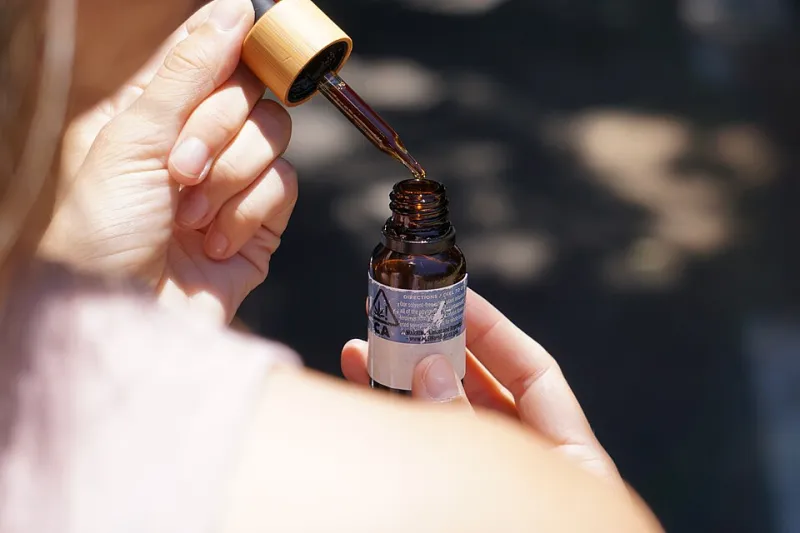
A pipette is a tiny piece of engineering, and it tells you a lot. Does the second bottle’s dropper draw up oil cleanly? Does it hold a full drop without dribbling? Does the rubber bulb feel firm or has it gone tacky?
Changes here can be a sign of a different supplier or a cost-cut. They can also make dosing inconsistent, which matters more than many people admit. If you relied on five drops last time and now the dropper delivers a fatter or thinner drop, your effective dose has shifted. Note it. Adjust slowly. A gem should feel familiar in the hand.
Labels that shift under your nose
Brands update labels all the time: new certifications, revised serving suggestions, a QR code replacing a paragraph of small print. Some changes are cosmetic. Others are substantive.
Compare the front and back of both bottles. Check the CBD content per ml, the carrier oil, the flavours or terpenes, and any warning or storage advice. If the carrier has changed from hemp seed oil to MCT, for example, that is not necessarily a downgrade — but it is a change you should know about. If the stated strength has moved, recalculate your dose rather than assuming your old routine still applies.
A UK brand that communicates label changes clearly — by email, on the website, or inside the parcel — earns trust. One that quietly swaps things and hopes you will not notice does not.
Effect consistency: the honest test
This is the fuzzy one. CBD is not a drug with an instant, measurable hit. Effects are subtle and cumulative, and they vary with sleep, stress and what else is in your day. Still, you can look for patterns.
Over the first week of the second bottle, keep a short note on your phone. Same time, same routine, same number of drops. Do you feel broadly the same as you did on the first bottle? Is the onset similar? Does it last a comparable stretch of the evening? You are not looking for a miracle; you are looking for reliability.
If the second bottle feels markedly weaker or harsher, give it a few days before deciding. If the pattern holds, that is useful information. It may be a batch variation, a strength change or simply a product that does not deserve a permanent spot.
The verdict: keep, watch or walk away
Not every reorder needs a forensic report. Sometimes the second bottle is simply lovely, and you put it back on the shelf without a second thought. But when something nags at you, this audit gives you language for it.
Keep it if the batch trace checks out, the oil looks and smells familiar, the dropper behaves, the label changes are explained, and your notes suggest consistent effects. Watch it if one or two small things have shifted — maybe the colour is a touch darker, or the dropper is different — but nothing feels off. Walk away if the batch code is untraceable, the oil has changed dramatically, the label has been quietly rewritten, or your own notes tell you the magic has gone.
A second bottle is not just a repurchase. It is a small, practical act of curation. In 2026, with so many UK CBD options competing for a place in your routine, that repeat purchase is one of the clearest signals of a genuine gem.